
Discover Stone Cladding for Exterior Walls | How to install

Updated: Dec 10, 2025
Why Choose Stone Cladding For Exterior Walls
One of the most sophisticated methods to give your house classic beauty and durability is to use stone cladding for exterior walls. Constructed from genuine stones such as limestone, marble, slate, or sandstone, it not only improves the aesthetic appeal but also shields your walls from aging and weather damage. Every natural stone has a distinct texture and color, ensuring your façade possesses a rich, natural character. At Stone Ideas, we create and provide premium natural stone cladding that turns plain walls into enduring artworks that are aesthetically pleasing, low-maintenance, and long-lasting.
What is Stone Cladding?
The process of applying a layer of natural stone to walls gives them a stunning, textured, and long-lasting appearance. Stone cladding blends the beauty of natural patterns and colors with the durability of stone, making it a popular option for both indoor and outdoor spaces.
Stone cladding is perfect for modern construction because it employs lightweight stone veneers that are simple to install and maintain, unlike traditional brickwork. In addition to being aesthetically pleasing, stone cladding offers weather protection, insulation, and classic style.

How to install stone cladding on exterior walls
To assist you in creating areas that genuinely showcase the creativity of nature, Stone Ideas crafts and supplies premium natural stone cladding. This is the proper way to install it.
Step 1: Preparing the Surface
Proper preparation ensures long-lasting adherence.
Thoroughly clean the wall surface to remove dirt, paint, oil, or dust.
Gently roughen smooth walls to improve grip.
Fill any cracks or uneven areas to guarantee a flat surface.
If the wall is very smooth, chisel it before proceeding.
Step 2: Making the Stone Waterproof
Apply a bituminous primer or waterproof coating to external walls. This protects the surface from moisture since they are subject to rain and humidity.
Let it dry thoroughly before starting the installation.
Step 3: Safety and Accessibility Setup
For safe and efficient installation:
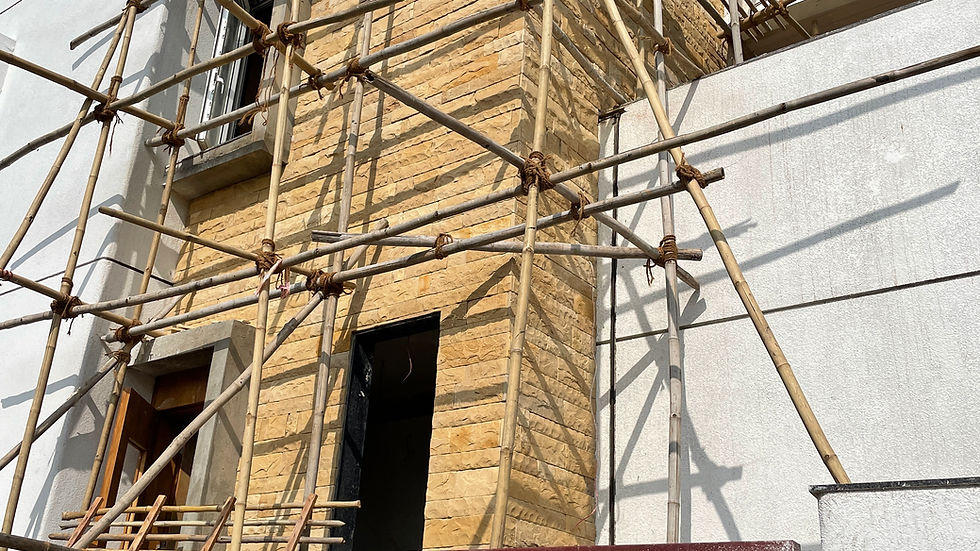
Build a bamboo scaffolding structure for workers to climb and work comfortably.
Reinforce it with metal pipes or frames for additional safety and durability.
Ensure the structure is well-anchored and stable before starting work.
A secure setup ensures precision and prevents accidents.
Step 4: Prepare the Mortar Mix with Stone Adhesive
The right mortar mix ensures the stones stay firm for years.
Add a high-quality stone adhesive (polymer-based) for stronger bonding and flexibility.
Include a bonding polymer or waterproofing compound for extra durability.
Mix well with clean water until a thick, smooth consistency is achieved.
Pro Tip: For larger or heavier stones, combine both mortar and stone adhesive for maximum grip.
Step 5: Start Fixing the Stones
Start cladding from the bottom corner of the wall and work upwards.
Apply mortar or adhesive on both the wall and the back of the stone for double bonding.
Press firmly and use a spirit level to check alignment.
For heavy stones, secure them with stainless steel pins or clamps for safety.
Use a mix of stone sizes and colors to achieve a natural, balanced look.

Step 6: Maintain Consistent Joints
Neat joints make a big difference in appearance.
Keep 3–10 mm gaps between stones, depending on the design.
Fill the gaps with mortar or pointing grout.
Choose recessed joints for a rustic look or flush joints for a clean, modern finish.
Step 7: Cleaning and Finishing
After the wall is completed:
Clean off excess mortar with a damp cloth before it hardens.
Wash the surface lightly after 24–48 hours.
Apply a stone sealer to protect against stains, water, and dust while enhancing the stone’s natural color.
Step 8: Curing and Final Inspection
Cure the wall by sprinkling light water for 2–3 days. Check for any hollow sounds or loose stones and fix them promptly. This ensures a strong, long-lasting exterior finish.
Conclusion
Installing stone cladding on exterior walls is a blend of art and technique. Each step — from preparing the wall and using the right mortar mix to applying stone adhesive and sealers — contributes to the wall’s strength and beauty.
At Stone Ideas, we offer a wide range of natural stone cladding options including marble, sandstone, and slate. These are designed to enhance any space with natural elegance and durability. Transform your exterior walls into architectural masterpieces. Explore our exclusive collection at www.stoneideas.co and let nature inspire your next design.
Frequently Asked Questions (FAQs)
1. What is the best adhesive for stone cladding?
Use a polymer-based stone adhesive specifically designed for natural stone. It offers excellent grip, flexibility, and resistance to temperature changes. For heavy stones, it’s best to use both mortar and adhesive together.
2. Can stone cladding be installed directly on painted walls?
No. Paint reduces adhesion. You should remove the paint and roughen the wall surface before applying mortar or adhesive.
3. How do I prevent water seepage behind stone cladding?
Always apply a waterproof coating or bitumen primer before installation, and seal the joints properly after completion. Applying a stone sealer also helps repel water and stains.
4. Is stone cladding suitable for all exterior walls?
Yes, stone cladding can be applied to brick, concrete, or cement-plastered walls. For weak or uneven surfaces, install a wire mesh to improve grip.
5. How long does exterior stone cladding last?
With proper installation and occasional maintenance, natural stone cladding can last for decades. It is weather-resistant, durable, and retains its beauty for years with minimal upkeep.
6. Should I seal my stone cladding after installation?
Yes. A good-quality stone sealer protects against stains, dust, and moisture while enhancing the natural tone of the stone. It should be reapplied every few years depending on weather exposure.
7. Can I install stone cladding myself or should I hire a professional?
For small interior projects, DIY may work. But for exterior walls, it’s best to hire professionals. Proper alignment, mortar mixing, and waterproofing are crucial for long-term results.
8. Which type of natural stone is best for exterior wall cladding?
Popular options include sandstone, slate, limestone, and marble. Each has unique textures and tones — your choice depends on your design preference and climate conditions.
9. How to order from Stone Ideas?
You can easily place your order by filling out the inquiry form available on our website. Once submitted, our team will get in touch to assist you with product details and pricing. You can also connect with us directly through Instagram, WhatsApp, or a quick phone call for faster communication and personalized support.


